
 By Frances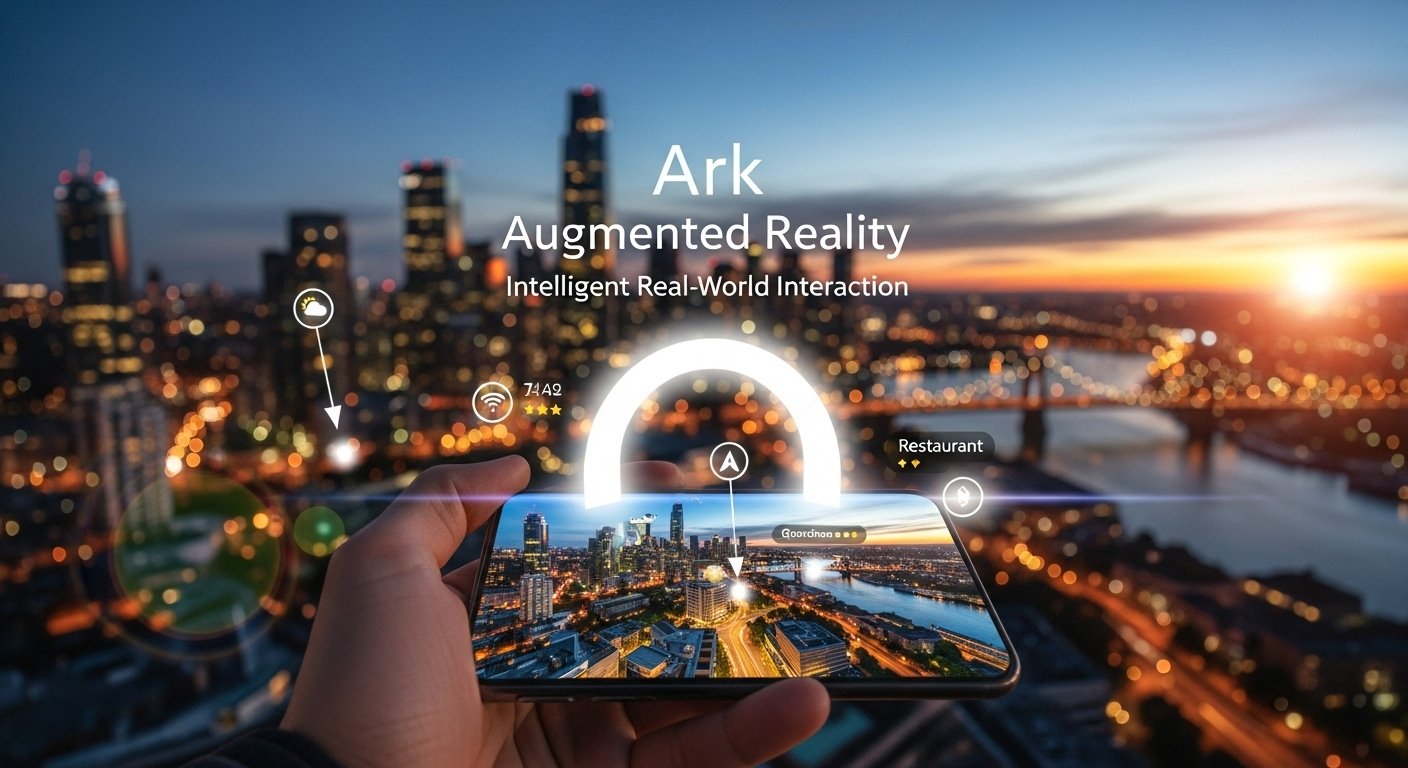
Augmented Reality (AR) has evolved rapidly over the past decade, moving from simple visual overlays to immersive, interactive digital experiences. Among the most promising developments in this space is Ark Augmented Reality, a concept often associated with Augmented Reality with Knowledge (ArK). Unlike traditional AR, which merely places digital objects into a user’s field of view, Ark Augmented Reality focuses on intelligent real-world interaction—where digital content understands its environment, context, and user intent.
By integrating artificial intelligence (AI), computer vision, and knowledge graphs, Ark Augmented Reality represents a significant step toward smarter, more meaningful AR experiences. This evolution is reshaping how humans interact with digital information in physical spaces, unlocking new possibilities across industries such as gaming, enterprise training, research, retail, and the emerging metaverse.
What Is Ark Augmented Reality?
Ark Augmented Reality refers to advanced AR systems that go beyond static or decorative overlays. At its core, it combines real-time perception with knowledge-driven intelligence. This allows digital elements not only to appear in the real world but also to respond intelligently to what they “see” and understand.
Traditional AR systems typically rely on markers, GPS data, or basic object recognition. In contrast, Ark Augmented Reality uses AI-powered computer vision to analyze surroundings, recognize objects, understand spatial relationships, and adapt content dynamically. When paired with knowledge graphs—structured databases that link concepts, objects, and relationships—AR experiences become context-aware and interactive rather than passive.
This shift transforms AR from a visual novelty into a functional, decision-support tool capable of enhancing human understanding and productivity.
Key Technologies Behind Ark Augmented Reality
Ark Augmented Reality is powered by a combination of advanced technologies working together seamlessly:
Artificial Intelligence and Machine Learning
AI enables AR systems to interpret complex environments, learn from user behavior, and make intelligent predictions. Machine learning models help refine object recognition, gesture tracking, and natural language interactions over time.
Computer Vision
Computer vision allows Ark AR systems to identify real-world objects, surfaces, and movements with precision. This is essential for anchoring digital content accurately and ensuring stable, realistic interactions within physical spaces.
Knowledge Graphs
Knowledge graphs connect data points in meaningful ways, allowing AR systems to “understand” context. For example, an AR system can recognize a machine in a factory and instantly display relevant operational data, maintenance history, or safety instructions based on its identity and state.
Wearable and Smart Display Hardware
Ark Augmented Reality is often deployed through smart glasses, kiosks, and head-mounted displays. Enterprise-focused hardware, such as AR smart glasses used in industrial or research environments, enables hands-free, real-time interaction with digital information.
How Ark Augmented Reality Enables Intelligent Interaction
The defining feature of Ark Augmented Reality is its ability to create intelligent real-world interaction. This means the system does not merely show information but actively responds to the user and environment.
For example, in an industrial setting, an AR system can recognize a specific component on a production line, understand its function, and guide a technician through a repair process step by step. The content adapts based on what the technician is looking at, reducing errors and improving efficiency.
In public kiosks or research installations, Ark AR systems can personalize content based on user behavior, location, or intent. Instead of navigating menus, users interact naturally through gestures, gaze, or voice, creating a more intuitive experience.
Applications Across Industries
Ark Augmented Reality is not limited to a single use case. Its intelligent, adaptable nature makes it valuable across multiple sectors.
Gaming and Entertainment
In gaming, Ark AR enables experiences where virtual characters and objects react intelligently to the player’s real environment. Games become more immersive as digital elements understand physical obstacles, lighting conditions, and player movement, blurring the line between reality and virtual worlds.
Enterprise Training and Industrial Use
One of the strongest use cases for Ark Augmented Reality is enterprise training. Workers can receive real-time instructions, safety alerts, and performance feedback while performing tasks. This reduces training time, minimizes downtime, and improves knowledge retention.
Research and Education
In research and education, Ark AR allows complex concepts to be visualized and explored interactively. Students and researchers can interact with 3D models that respond intelligently to input, making learning more engaging and effective.
Retail and Customer Experience
Retail environments benefit from context-aware AR that provides personalized recommendations, product information, or virtual try-ons. Ark Augmented Reality enhances customer engagement by delivering relevant content at the right moment.
Metaverse and Spatial Computing
As the metaverse continues to develop, Ark Augmented Reality plays a critical role in bridging physical and digital spaces. Intelligent AR interactions form the foundation of spatial computing, where digital environments are seamlessly integrated into everyday life.
Advantages Over Traditional AR Systems
Ark Augmented Reality offers several key advantages compared to conventional AR:
-
Context awareness: Digital content adapts to the environment and user intent
-
Higher accuracy: Advanced computer vision improves object recognition and tracking
-
Personalization: AI enables tailored experiences for individual users
-
Scalability: Knowledge-driven systems can be expanded across multiple domains
-
Practical value: Focus on real-world problem-solving rather than visual effects alone
These advantages make Ark Augmented Reality particularly attractive for enterprise and professional applications, where reliability and usefulness are essential.
Challenges and Future Outlook
Despite its potential, Ark Augmented Reality also faces challenges. Developing intelligent AR systems requires significant computational power, high-quality data, and sophisticated hardware. Privacy and data security are also critical concerns, especially when systems continuously analyze real-world environments.
However, advancements in edge computing, AI optimization, and wearable hardware are steadily addressing these limitations. As technology matures, Ark Augmented Reality is expected to become more accessible, affordable, and widely adopted.
Looking ahead, Ark Augmented Reality represents a shift toward human-centered digital interaction, where technology enhances perception and decision-making without overwhelming the user. It moves AR from being a novelty to becoming an essential interface between humans and digital knowledge.
Conclusion
Ark Augmented Reality marks a pivotal evolution in augmented reality technology. By combining AI, computer vision, and knowledge-based systems, it enables intelligent real-world interaction that goes far beyond simple visual overlays. From gaming and enterprise training to research and the metaverse, Ark Augmented Reality is shaping a future where digital information truly understands and responds to the physical world.
As adoption grows, Ark Augmented Reality is poised to redefine how we interact with technology—making experiences smarter, more intuitive, and deeply integrated into everyday life.