Yellowstone National Park offers an extraordinary range of experiences — geothermal landscapes found nowhere else on Earth, one of the most intact large-mammal ecosystems in North America, hundreds of miles of hiking trails, historic areas, and scenic drives that pass through genuinely wild terrain. For first-time visitors, knowing where to focus is half the challenge.
The activities that matter most will depend on your available time, the season you visit, your interests, and current park conditions. A family with two days and young children will make very different choices than a solo photographer with five days and a focus on wildlife. This guide is organized to help you identify the experiences most relevant to your trip.
For a full overview of planning your Yellowstone visit — including entrance fees, accommodation, and getting there — see our Yellowstone National Park travel guide.
Best Things to Do in Yellowstone at a Glance
| Activity | Why Visit | Typical Time Needed | Key Planning Consideration |
|---|---|---|---|
| Old Faithful Geyser | Iconic geyser with reliable eruption predictions | 1–2 hours | Check predicted eruption times on arrival |
| Grand Prismatic Spring | Largest hot spring in the US; vivid colors | 1–2 hours | Overlook viewpoint requires short trail walk |
| Grand Canyon of the Yellowstone | Dramatic canyon, waterfalls, iconic viewpoints | 2–3 hours | Multiple viewpoints; South and North Rim drives |
| Mammoth Hot Springs | Unique travertine terraces; historic area | 1–2 hours | Terraces change over time as thermal activity shifts |
| Wildlife Watching | Wolves, bears, bison, elk in natural habitat | Half to full day | Early morning and evening most productive |
| Geothermal Feature Exploration | Hot springs, mudpots, fumaroles across the park | Variable | Stay on boardwalks at all times |
| Hiking | Trails for all abilities across all regions | Variable | Check current conditions before heading out |
| Scenic Drives | Dramatic landscapes, wildlife sightings, viewpoints | Variable | Road access varies by season |
| Yellowstone Lake | Scenic lake; boating and fishing opportunities | Half day or more | Verify current permits and seasonal access |
| Ranger Programs | Free educational talks and walks | 30 min – 2 hours | Check current schedules at visitor centers |
| Visitor Centers | Maps, exhibits, current conditions, planning | 30–60 minutes | Useful starting point for every visit |
| Historic Areas | Fort Yellowstone; documented park history | 30–60 minutes | Good complement to Mammoth Hot Springs area |
| Photography | Geothermal features, wildlife, landscapes | Variable | Wildlife distances must be maintained at all times |
1. See Old Faithful Geyser
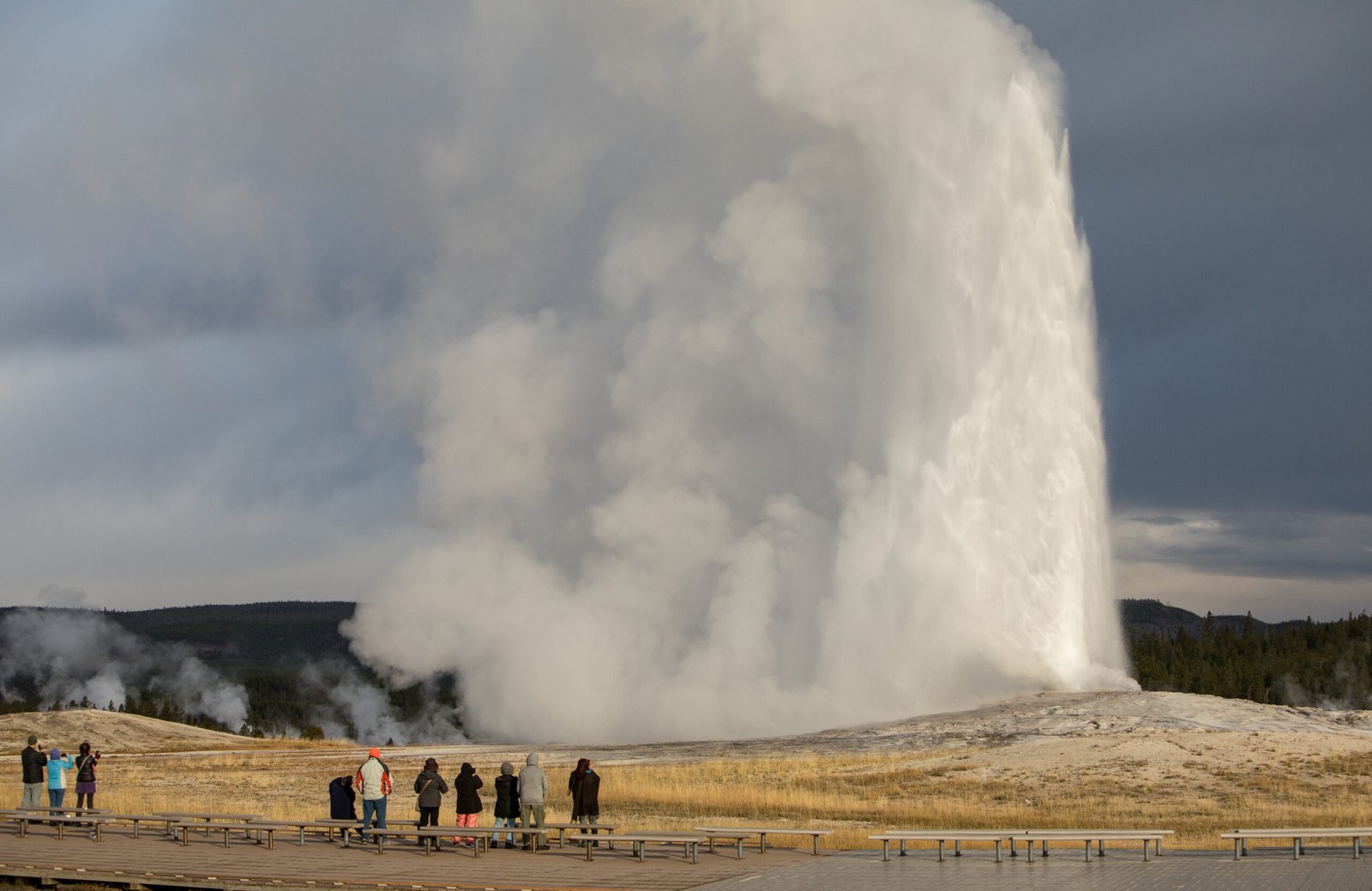
Old Faithful is Yellowstone’s most famous geothermal feature, and it earns the attention. According to the National Park Service, Old Faithful erupts approximately every 44 to 125 minutes, reaching heights of up to 184 feet. The visitor center posts predicted eruption times based on the duration of the previous eruption, making it one of the more predictable geysers in the park.
Arriving 15 to 20 minutes before a predicted eruption gives you time to find a spot along the boardwalk seating area. But Old Faithful is only the beginning of what this area offers. The Upper Geyser Basin — one of the most geyser-dense areas in the world — stretches beyond Old Faithful and includes dozens of additional active geysers and hot springs accessible via a boardwalk loop. Castle Geyser, Beehive Geyser, and Morning Glory Pool are among the features worth walking to if time allows.
Check current eruption predictions at the Old Faithful Visitor Education Center information or upon arrival at the visitor center itself.
2. Explore Grand Prismatic Spring
Grand Prismatic Spring is the largest hot spring in the United States and one of the most visually striking features in the entire park. Its vivid bands of color — deep blue at the center transitioning through green, yellow, and orange at the edges — are produced by heat-tolerant microorganisms called thermophiles that thrive in the varying temperature zones of the spring.
The spring sits in the Midway Geyser Basin and is accessible via a flat boardwalk. For the elevated perspective that photographs capture, the Fairy Falls Trail includes a viewpoint overlook above the spring. Both the ground-level boardwalk and the overlook trail offer distinct experiences and are worth combining if your time allows.
Visitors must remain on designated boardwalks at all times in hydrothermal areas. The ground around hot springs and geysers can look solid but is dangerously thin crust in places.
3. Visit the Grand Canyon of the Yellowstone
The Grand Canyon of the Yellowstone is one of the park’s most dramatic geological features and one that surprises many first-time visitors who expect the park to be primarily about geothermal activity. The canyon runs approximately 20 miles long and reaches depths of up to 1,200 feet, with the Yellowstone River running through it and producing two major waterfalls: Upper Falls and Lower Falls.
Major viewpoints are accessible from both the South Rim and the North Rim:
- Artist Point (South Rim) — the most iconic viewpoint, offering a direct view of the Lower Falls and canyon walls
- Lookout Point and Grand View (North Rim) — alternative perspectives with less foot traffic
- Uncle Tom’s Trail — a steep trail leading to a closer view of Lower Falls (check current access before visiting)
The canyon walls display vivid yellow, red, and orange hues caused by hydrothermal alteration of volcanic rock — the feature that gave Yellowstone its name.
4. Explore Mammoth Hot Springs
Mammoth Hot Springs occupies a distinct place in the park’s geothermal landscape. Rather than geysers, this area is defined by travertine terraces — flowing platforms of calcium carbonate deposited by hot water rising through limestone. The terraces change over time as thermal vents shift, making the landscape genuinely dynamic.
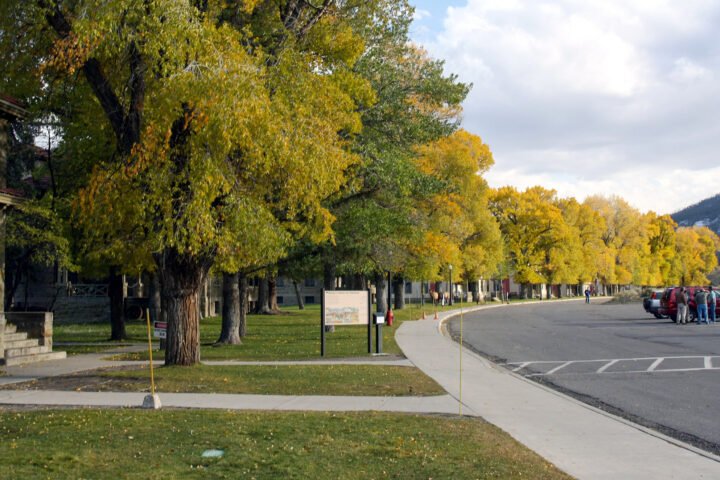
The area has two main sections — the Upper Terraces (accessible by a one-way driving loop) and the Lower Terraces (accessible via boardwalks). Both are worth visiting. The nearby historic district includes Fort Yellowstone, a collection of historic army-era buildings from the period when the U.S. Army administered the park from 1886 to 1918.
Mammoth is also the location of the park’s North Entrance visitor facilities and remains open to wheeled vehicles year-round — making it accessible in winter when most other areas of the park are not.
5. Watch Wildlife in Yellowstone
Yellowstone protects one of the most significant intact wildlife ecosystems in the lower 48 states. According to the National Park Service, the park is home to 67 mammal species, including gray wolves, grizzly bears, black bears, American bison, elk, pronghorn, moose, and bighorn sheep.
Key wildlife-watching areas:
- Lamar Valley — the most celebrated wildlife-watching location in the park, often called “America’s Serengeti.” Wolves, bears, and bison are all regularly observed here, particularly in early morning and evening.
- Hayden Valley — strong for bison herds, grizzly bears, and waterfowl. Located in the center of the park between Yellowstone Lake and Canyon Village.
- Madison River area — bison, elk, and waterfowl.
- Northern Range — reliable for pronghorn, elk, and wolves during winter months.
Wildlife sightings are never guaranteed regardless of location or season. Early mornings and late evenings are generally the most productive viewing periods.
Safe viewing distances required by the NPS:
- At least 100 yards from bears and wolves
- At least 25 yards from all other wildlife, including bison and elk
These are legal requirements, not suggestions. Bison account for more visitor injuries in Yellowstone than any other animal. Regardless of how passive an animal appears, approaching it is dangerous. Review the NPS wildlife safety guidance before your visit.
6. Explore Yellowstone’s Geysers and Hot Springs
Beyond Old Faithful, Yellowstone contains approximately 10,000 thermal features — the highest concentration of hydrothermal features on Earth, according to the National Park Service. This includes geysers, hot springs, mudpots, and fumaroles spread across multiple geyser basins throughout the park.
Notable areas beyond Old Faithful and Grand Prismatic include:
- Norris Geyser Basin — the hottest and most dynamic geyser basin in the park, home to Steamboat Geyser, the world’s tallest active geyser
- Lower Geyser Basin — includes Fountain Paint Pots, a particularly accessible area with mudpots, hot springs, fumaroles, and geysers in close proximity
- West Thumb Geyser Basin — sits on the edge of Yellowstone Lake, where some hot springs extend into the lake itself
Boardwalk trails connect features within each basin. Visitors must stay on designated boardwalks and trails at all times — the thin crust surrounding thermal features poses serious danger, and injuries and fatalities have occurred when people left marked paths. The NPS Things To Do page includes current guidance on visiting these areas safely.
7. Go Hiking in Yellowstone
Yellowstone has more than 900 miles of trails, covering terrain that ranges from flat boardwalk loops accessible to most visitors to strenuous backcountry routes requiring multi-day preparation. Hiking is one of the best ways to move beyond the most-visited sites and experience quieter parts of the park.
For casual walkers and families:
- Upper Geyser Basin Loop — flat, accessible, passes dozens of thermal features
- Mud Volcano Trail — short loop through an area of active mudpots and fumaroles
- Mammoth Hot Springs Terraces — boardwalk access with minimal elevation gain
For more active day hikers:
- Fairy Falls Trail — moderate distance to a waterfall and the Grand Prismatic overlook
- Mount Washburn — strenuous, high-elevation hike with panoramic views (check seasonal access)
Important hiking considerations:
- Carry bear spray and know how to use it before you need it
- Check current trail conditions and any closures before heading out — snow, bear management activity, or weather can affect access at any time of year
- Weather changes quickly, particularly in afternoon — carry layers and rain gear
- Stay on designated trails in thermal areas
- Carry adequate water; altitude affects hydration needs
The NPS Plan Your Visit page is the best starting point for current trail information.
8. Drive Yellowstone’s Scenic Roads
For many visitors, driving through Yellowstone is as much a part of the experience as stopping at specific sites. The Grand Loop Road — an approximately 142-mile figure-eight highway through the center of the park — connects all major regions and passes through landscapes that shift dramatically between thermal basins, river valleys, forested plateaus, and open wildlife habitat.
Several shorter routes add additional interest:
- Firehole Lake Drive — a one-way road through a cluster of thermal features including Great Fountain Geyser
- Blacktail Deer Plateau Drive — a gravel one-way road in the northern range with good wildlife-viewing opportunities
- Lamar Valley Road — particularly productive for wildlife sightings in early morning
Plan for wildlife jams — when animals are visible near the road, traffic can slow or stop. Build extra time into any driving day. Road access is also seasonal, and some routes do not open until late spring or close in fall. Current road status is available through the NPS road conditions information.
9. Visit Yellowstone Lake
Yellowstone Lake is one of the largest high-elevation lakes in North America, sitting at approximately 7,733 feet above sea level. The lake is visually striking — particularly on calm mornings when the surrounding mountains reflect on the water — and provides a very different landscape from the park’s thermal areas.
Recreational opportunities at the lake include fishing (which requires a valid park fishing permit) and boating (which also has specific permit and access requirements). Visitors interested in fishing or boating should verify current regulations and permit requirements through the NPS Yellowstone Lake information before arriving, as requirements and seasonal access can change.
West Thumb Geyser Basin, located on the western shore of the lake, combines geothermal features with lakeside scenery in an unusual and photogenic setting.
10. Join a Ranger Program
Ranger-led programs are one of the most underutilized resources available to Yellowstone visitors. According to the NPS, the park offers a range of free ranger programs, including talks, walks, and demonstrations, that provide context and depth that independent exploration alone often cannot.
Programs vary by season and location — topics can include geothermal geology, wildlife ecology, park history, and Leave No Trace practices. Junior Ranger programs are available for younger visitors and provide a structured, engaging way for children to explore the park.
Check the current schedule at any park visitor center upon arrival, or review current program information through the NPS Plan Your Visit page.
11. Visit Yellowstone’s Visitor Centers
Visitor centers are a practical first stop, particularly for first-time visitors. They provide:
- Current road and trail conditions
- Wildlife activity reports
- Maps and orientation
- Ranger recommendations based on that day’s conditions
- Educational exhibits on geothermal geology, wildlife, and park history
Major visitor centers include the Old Faithful Visitor Education Center, Canyon Visitor Education Center (which includes a notable geology exhibit), Mammoth Visitor Center, and others distributed across the park. Not all visitor centers are open year-round or during all hours — verify current operating information through the NPS visitor centers page.
12. Explore Yellowstone’s Historic Areas
Yellowstone’s history as America’s — and the world’s — first national park, established in 1872, is woven into the landscape in ways that are easy to overlook. Fort Yellowstone, located in the Mammoth Hot Springs area, preserves structures from the period when the U.S. Army managed the park between 1886 and 1918, before the National Park Service was established in 1916.
The Old Faithful Inn, a National Historic Landmark built in 1903–1904, is itself worth visiting for its architecture — a remarkable log structure built from materials sourced locally. It remains an operational lodge and a central landmark in the Old Faithful area.
13. Try Photography and Scenic Viewing
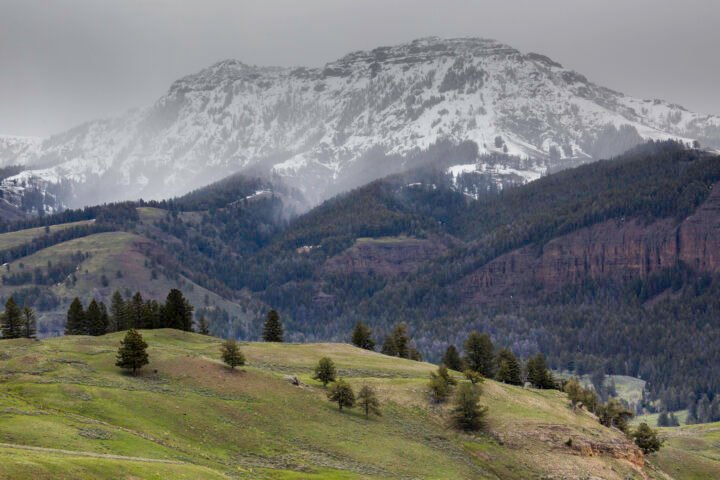
Yellowstone is one of the most photographed natural environments in North America, and the reasons are apparent: the color and scale of geothermal features, the open terrain in Lamar Valley that allows clear sightlines on wildlife, and dramatic canyon and mountain scenery.
A few practical considerations for photography:
- Geothermal features are most atmospheric in cooler morning hours, when steam is more visible
- Wildlife photography requires maintaining legal distances — a long telephoto lens is strongly recommended
- The overlook above Grand Prismatic Spring offers the elevated perspective most frequently seen in images of the spring
- Grand Canyon of the Yellowstone light is generally better in morning at Artist Point
- Always prioritize safety over a photograph — approaching wildlife for a better shot is illegal and dangerous
14. Explore Yellowstone in Different Seasons
The activities available to you change substantially depending on when you visit. Some areas are accessible only in summer; winter access requires guided transportation across most of the park; spring and fall each offer specific wildlife events and landscape conditions that summer does not.
For a detailed breakdown of what each season offers and the practical trade-offs between them, see our guide on the best time to visit Yellowstone.
15. Choose Activities Based on Your Trip Length
Not every activity fits into every trip. A one-day visit to Yellowstone requires ruthless prioritization — likely just one geographic area and two or three stops. A three-day visit opens up the possibility of covering the major regions. Five days or more allows for genuine flexibility and repeat visits to favorite areas.
For practical guidance on structuring your time, our article on how many days you need in Yellowstone walks through what is realistically achievable within each trip length.
How to Choose the Best Yellowstone Activities for Your Trip
For geothermal features: Prioritize the Upper Geyser Basin (Old Faithful and surroundings), Midway Geyser Basin (Grand Prismatic Spring), Norris Geyser Basin, and the Fountain Paint Pots area. These are geographically spread across the park, so plan which to visit based on your entry point and accommodation location.
For wildlife: Focus time in Lamar Valley and Hayden Valley. Early mornings are the most productive. Bring binoculars; patience matters more than luck.
For hiking: Research current conditions before your trip, not just which trails look interesting on a map. Choose trails based on your fitness level, available time, and what is actually accessible during your specific visit dates.
For families: Accessible boardwalk areas like the Upper Geyser Basin, Fountain Paint Pots, and Mammoth Hot Springs terraces work well for mixed-ability groups. Ranger programs are particularly useful for keeping younger visitors engaged.
For photographers: Geothermal basins and Lamar Valley are the primary subjects. The Grand Canyon of the Yellowstone provides architectural and geological drama. Budget time for early starts and late-evening light.
Yellowstone Safety Tips
Yellowstone’s extraordinary environment also presents real hazards. According to the NPS, injuries in the park’s thermal areas most often occur when visitors leave designated boardwalks and trails.
- Stay on boardwalks and designated trails in all thermal areas without exception
- Maintain safe distances from wildlife — 100 yards from bears and wolves; 25 yards from all other wildlife
- Prepare for rapidly changing weather — temperatures can shift significantly within hours; afternoon thunderstorms are common in summer
- Check road and trail conditions before each day’s activities through the NPS official resources
- Carry adequate water and food — services are spread out, and altitude increases dehydration risk
- Carry and know how to use bear spray before hiking any trail
- Follow all park regulations — wildlife feeding, off-trail travel in thermal areas, and other violations carry serious consequences
How Many Activities Can You Fit Into One Yellowstone Trip?
Yellowstone’s scale is the most common source of itinerary miscalculation for first-time visitors. The drive from the geyser basins in the southwest to Lamar Valley in the northeast takes approximately two hours each way under normal conditions. Add wildlife jams, thermal-area boardwalk time, hiking, and general exploration, and most traveler days have room for two or three meaningful stops rather than six or eight.
The practical advice: choose fewer stops and spend more time at each one. Yellowstone rewards depth over breadth. For realistic guidance on how to structure an entire trip, our Yellowstone National Park travel guide covers planning across different trip lengths and budgets.
Frequently Asked Questions
What is the number one thing to do in Yellowstone?
Old Faithful and the Upper Geyser Basin are the most visited attraction in the park, and for first-time visitors they remain the logical starting point. That said, travelers who prioritize wildlife over geothermal features often find Lamar Valley to be the most memorable part of their visit.
What should first-time visitors do in Yellowstone?
A practical first-time itinerary focuses on three core experiences: the geyser basins (Old Faithful and Grand Prismatic Spring), the Grand Canyon of the Yellowstone, and at least one dedicated wildlife-watching session in Hayden Valley or Lamar Valley. From there, additional days allow for hiking and other areas.
Can you see Old Faithful and Grand Prismatic in one day?
Yes. Both sit in adjacent basins in the southwestern section of the park and can be covered in the same day without excessive driving. Adding the Fairy Falls overlook trail to the Grand Prismatic visit makes the experience more complete and is manageable within a half-day.
Where is the best place to see wildlife in Yellowstone?
Lamar Valley in the northeast is the most consistently productive area for wolves, grizzly bears, and large bison herds. Hayden Valley, more centrally located, is also excellent for bison and bears. Both are most rewarding during early morning or evening hours.
Is hiking worth doing in Yellowstone?
Hiking adds significant value to a Yellowstone visit by moving you away from the most-visited roadside stops and into quieter terrain. Even short trails like the Fairy Falls Trail or the Upper Geyser Basin loop provide a meaningfully different experience from simply stopping at pullouts.
What should you not miss in Yellowstone?
Old Faithful, Grand Prismatic Spring, the Grand Canyon of the Yellowstone, and at least one early-morning wildlife session in Lamar Valley or Hayden Valley are the experiences most consistently valued by first-time visitors.
How many days do you need to see the main Yellowstone highlights?
Three days is the practical minimum for covering the major geyser basins, the canyon, and a wildlife-watching area. Four to five days allows for more hiking and a more relaxed pace. For a detailed breakdown, see our guide on how many days you need in Yellowstone.
What should you check before visiting Yellowstone?
Before arriving, check the current road conditions and operating dates, confirm that the facilities and trails you plan to visit are actually open, and review the current weather forecast. The NPS provides all of this through the official Yellowstone Plan Your Visit page.
Travel information can change. Park rules, road conditions, operating dates, weather, entrance fees, permits, and availability may change over time. Always verify important details with the relevant official source before traveling.