Yellowstone is one of those places that earns its reputation. It sits on top of one of the world’s largest active volcanic systems, holds more than half of the world’s geysers, and shelters an extraordinary range of wildlife across nearly 3,500 square miles of protected wilderness. For first-time visitors, the sheer scale of the park can make planning feel overwhelming.
This guide is written to help you cut through that noise. Whether you have one full day or a full week, whether you want to hike backcountry trails or simply watch Old Faithful from the boardwalk, this guide covers what you need to know before you arrive — entrance fees, seasonal timing, road conditions, wildlife safety, accommodation options, and practical packing advice.
All key planning details here are drawn from official National Park Service sources. Because park rules, fees, and road conditions change, you will find links throughout this guide to the relevant official pages so you can verify current information before your trip.
At-a-Glance: Yellowstone National Park
| Detail | Information |
|---|---|
| Location | Primarily Wyoming; also extends into Montana and Idaho |
| Established | March 1, 1872 (the world’s first national park) |
| Park Size | Approximately 2.2 million acres (3,472 sq miles) |
| Recommended Trip Length | 3–5 days for a meaningful visit |
| Best Seasons | Late May–June (shoulder season); September–early October (fall) |
| Busiest Season | July–August |
| Main Attractions | Old Faithful, Grand Prismatic Spring, Grand Canyon of the Yellowstone, Lamar Valley, Mammoth Hot Springs |
| Main Activities | Wildlife watching, hiking, thermal feature exploration, scenic drives, photography |
| Key Planning Considerations | Book lodging and campsites well in advance; check road conditions seasonally; carry fuel; cell service is limited |
Why Visit Yellowstone National Park?
Yellowstone is geologically unlike anywhere else on Earth that is easily accessible to the public. According to the National Park Service, the park contains approximately 10,000 thermal features — including hot springs, fumaroles, mud pots, and geysers — making it the most geothermally active place on the planet.
Beyond geology, Yellowstone is one of the few places in the lower 48 states where you can observe wolves, grizzly bears, American bison, elk, pronghorn, and bald eagles in a largely intact ecosystem. The Lamar Valley in particular has become one of the most celebrated wildlife-watching destinations in North America.
Different types of travelers find different rewards here. Hikers can access hundreds of miles of trails ranging from gentle boardwalk loops to strenuous backcountry routes. Photographers come for the dramatic thermal features at sunrise and the golden light over the Grand Canyon of the Yellowstone. Families find the geyser basins, ranger programs, and Junior Ranger activities genuinely engaging for younger visitors. And those who simply want to slow down and take in wild, open landscape can do exactly that from a vehicle or a roadside pullout.
Where Is Yellowstone National Park?
Yellowstone sits primarily in the northwest corner of Wyoming, with smaller portions extending into southern Montana and eastern Idaho. The nearest major gateway towns are:
- West Yellowstone, Montana — the most commonly used western entrance
- Gardiner, Montana — the northern entrance (the only entrance open to wheeled vehicles year-round)
- Cody, Wyoming — the nearest city to the eastern entrance
- Jackson, Wyoming — a popular southern gateway, also serving Grand Teton National Park
The park is roughly 500 miles from Salt Lake City, 300 miles from Billings, Montana, and about 550 miles from Denver. It is not a place you pass through incidentally — a trip to Yellowstone requires planning your route deliberately.
How Many Days Do You Need in Yellowstone?
There is no single right answer, but here is a practical framework:
One day: Possible, but limiting. A one-day visit works best if you focus on one region — for example, the geyser basins along the western loop. You will not see the full park, but you can still experience iconic features like Old Faithful and Grand Prismatic Spring. Arrive early to avoid the worst of midday crowds.
Three days: The most common recommendation for a first visit. Three days allows you to cover both the upper and lower loops, visit Lamar Valley for wildlife watching, see the Grand Canyon of the Yellowstone, and explore at least some of the major thermal areas without feeling rushed.
Five days or more: If you want to hike longer trails, explore the backcountry, spend time in quieter corners of the park, or combine Yellowstone with Grand Teton National Park to the south, a five-day trip gives you meaningful room to do that.
Regardless of length, avoid trying to see everything. The park rewards those who slow down, choose fewer stops, and spend real time at each one.
Best Time to Visit Yellowstone National Park
Summer (July–August)
Summer is peak season for good reason — most roads and facilities are open, the weather is generally mild during the day, and wildflowers are abundant. Daytime highs typically reach the mid-70s°F in July, though evenings at Yellowstone’s elevation (most of the park sits above 7,000 feet) can drop significantly even in summer. The trade-off is crowds: popular areas like Old Faithful and Grand Prismatic Spring can be extremely busy, and accommodation books up months in advance.
Late Spring (May–June)
Late May and June offer a strong alternative to peak summer. Snowmelt creates dramatic waterfalls, baby wildlife are visible, and crowds are noticeably smaller than in July and August. Some higher-elevation roads may still be opening in early May, so checking current road status is essential. Temperatures can be unpredictable — snow is possible even in June at higher elevations.
Fall (September–October)
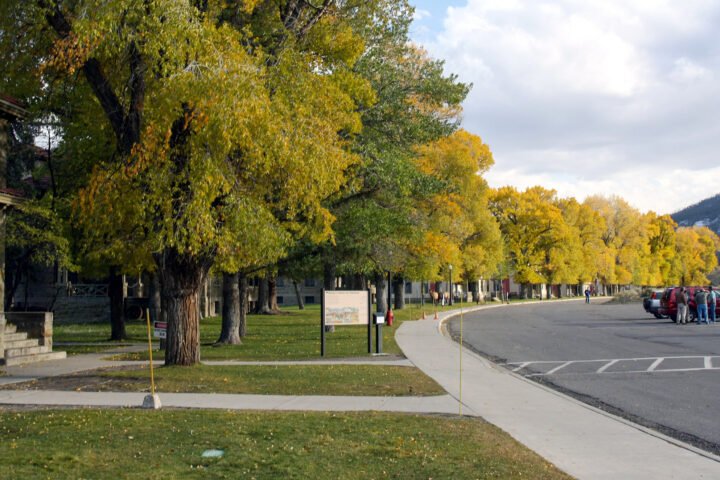
Early fall is one of the most appealing times to visit for those who can be flexible. Elk rut activity is visible in September, aspen trees turn golden, crowds thin considerably after Labor Day, and wildlife viewing remains excellent. Temperatures cool quickly as October progresses, and some services begin closing for the season.
Winter (November–April)
Yellowstone in winter is a genuinely different experience. Most park roads are closed to wheeled vehicles from November through late April; travel inside the park is by snowcoach, snowmobile (guided tours), or skis. The thermal features are dramatically atmospheric against snow and ice, and bison are often spotted close to roadways where they graze. Winter visits require more advance planning, guided access, and appropriate cold-weather gear.
How to Get to Yellowstone National Park
By Air
The closest major airports to Yellowstone are:
- Jackson Hole Airport (JAC) — Jackson, Wyoming (southern entrance)
- Bozeman Yellowstone International Airport (BZN) — Bozeman, Montana (northern approach)
- Yellowstone Regional Airport (COD) — Cody, Wyoming (eastern entrance, seasonal)
- West Yellowstone Airport (WYS) — West Yellowstone, Montana (seasonal, limited service)
From any of these airports, a rental car is the most practical way to explore the park. There is no public transit system connecting the park’s internal features.
By Car
Driving to Yellowstone is the most common approach. The park has five entrance gates:
- North Entrance — Gardiner, Montana (US-89 North)
- Northeast Entrance — Cooke City, Montana
- East Entrance — Cody, Wyoming (US-20/16/14)
- South Entrance — Grand Teton National Park (US-89/191/287)
- West Entrance — West Yellowstone, Montana (US-20)
The Grand Loop Road — a figure-eight highway inside the park — connects the major attractions. Gas stations are available inside the park at several locations, but they are spaced far apart, and prices tend to be higher than outside the park. Filling your tank before entering is strongly advisable.
Best Things to Do in Yellowstone National Park
Old Faithful Geyser
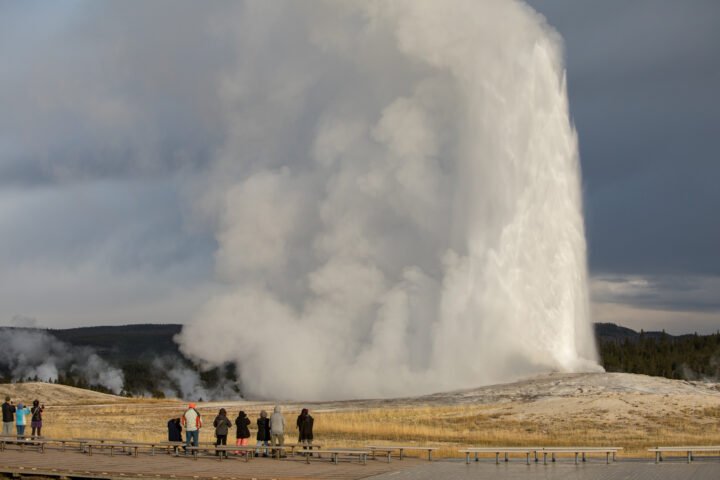
Old Faithful is the most visited geyser in the park, and it earns its place. The NPS tracks its eruption intervals and posts predicted eruption times at the Old Faithful Visitor Education Center. Arriving 15–20 minutes before a predicted eruption gives you time to choose a spot along the boardwalk. To make the most of the area, walk the Upper Geyser Basin loop, which passes dozens of additional features and requires relatively little exertion.
Grand Prismatic Spring
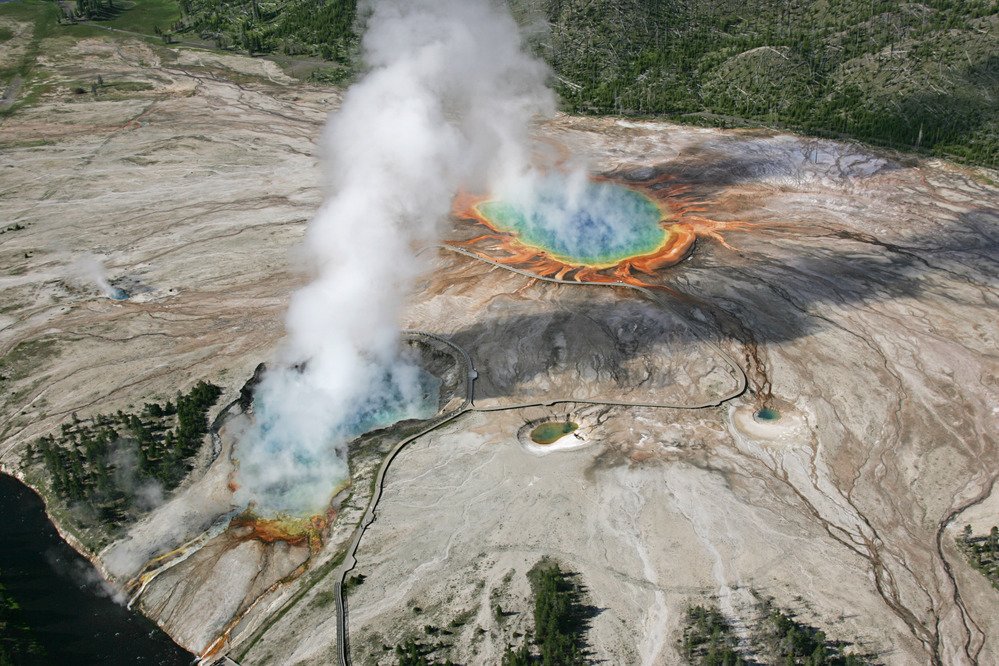
The largest hot spring in the United States, Grand Prismatic Spring sits in the Midway Geyser Basin. Its vivid concentric bands of color — produced by heat-loving microorganisms called thermophiles — are most visible from above. The Fairy Falls Trail includes a viewpoint overlook that offers the elevated perspective familiar from photographs. Ground-level access via the boardwalk is also worthwhile.
Grand Canyon of the Yellowstone
This is one of the park’s most dramatic geological features: a canyon roughly 20 miles long, up to 1,200 feet deep, with the Yellowstone River cutting through it. The Upper Falls and Lower Falls are both accessible from multiple viewpoints along the South Rim and North Rim drives. Artist Point, on the South Rim, is one of the most iconic viewpoints in the park.
Lamar Valley
Known informally as “America’s Serengeti,” Lamar Valley in the park’s northeast section offers some of the most reliable wildlife viewing in the country. Wolves, grizzly bears, bison herds, pronghorn, and coyotes are all regularly spotted here. Early mornings and late evenings are the best times to visit.
Mammoth Hot Springs
Located near the North Entrance, Mammoth Hot Springs features a series of travertine terraces formed by hot water depositing calcium carbonate. The terraces change over time as thermal activity shifts, making repeat visits genuinely different. The Upper and Lower Terraces are both accessible via boardwalks and driving loops.
Best Scenic Drives in Yellowstone National Park
The Grand Loop Road is the backbone of any road-based visit. The full loop is approximately 142 miles and connects the major regions of the park. Most first-time visitors split it into the Upper Loop (north) and Lower Loop (south) over multiple days.
Specific drives worth noting:
- Lamar Valley Road — Northeast section, best in early morning for wildlife
- Firehole Lake Drive — A one-way road passing thermal features including Great Fountain Geyser
- Blacktail Deer Plateau Drive — A gravel one-way road with good wildlife-viewing opportunities
Road opening dates vary each year based on winter conditions. Check the official NPS road conditions page before planning your route.
Best Hiking Trails in Yellowstone
Yellowstone has over 900 miles of trails, ranging from short boardwalk loops to multi-day backcountry routes.
For casual visitors:
- Upper Geyser Basin Loop — Flat, accessible, passes dozens of thermal features near Old Faithful
- Mud Volcano Trail — Short loop through a concentrated area of bubbling mud pots
- Mammoth Hot Springs Terraces — Boardwalk access to the terraces, minimal elevation gain
For more active hikers:
- Fairy Falls Trail — Moderate trail leading to a tall waterfall and the Grand Prismatic overlook
- Mount Washburn — Strenuous, high-elevation hike with panoramic views; typically open midsummer
All hikers should carry bear spray, know how to use it, and be aware that wildlife encounters can occur anywhere in the park. Trails at high elevation retain snow well into summer, so checking current conditions before heading out is important. The NPS recommends staying on designated trails to protect thermal features and surrounding fragile soil.
Yellowstone Wildlife Viewing
Yellowstone protects one of the most significant wildlife ecosystems remaining in North America. According to the NPS, the park is home to 67 species of mammals, 330 species of birds, and 16 species of fish.
Safe wildlife viewing rules:
- Stay at least 100 yards from wolves and bears at all times
- Stay at least 25 yards from all other wildlife, including bison and elk
- Never feed wildlife — it is illegal and dangerous to the animals
- Do not approach wildlife to get a closer photograph
- If an animal changes its behavior because of your presence, you are too close
Bison, despite appearing slow and docile, are responsible for more visitor injuries in Yellowstone than any other animal. The NPS urges visitors never to approach bison on foot, regardless of how passive they appear.
Where to Stay Near Yellowstone National Park
Lodging Inside the Park
The park has several lodges and cabin complexes operated by Yellowstone Forever’s concessionaire, Xanterra Parks & Resorts. Options include the historic Old Faithful Inn, Lake Yellowstone Hotel, Canyon Lodge, and others. These fill up extremely quickly — reservations for summer months often open in the preceding fall and sell out rapidly. Staying inside the park significantly reduces driving time between major features and allows early morning access before day visitors arrive.
Gateway Town Lodging
West Yellowstone, Gardiner, Jackson, and Cody all have a range of hotels, motels, and vacation rentals. These towns sit just outside park entrances and are practical bases for multi-day visits. Availability and pricing fluctuate significantly by season. Booking several months in advance for summer visits is strongly advisable.
Camping
Yellowstone has 12 campgrounds. Some accept advance reservations through Recreation.gov; others operate on a first-come, first-served basis. Popular campgrounds like Bridge Bay and Canyon fill quickly in summer. Check the official NPS camping page for current reservation availability, dates, and rules.
Yellowstone National Park Entrance Fees, Permits & Reservations
According to the National Park Service, current entrance fees (as of the time of research) are:
| Pass Type | Fee |
|---|---|
| Private vehicle (7-day pass) | $35 |
| Motorcycle (7-day pass) | $30 |
| Individual (on foot/bicycle, 7-day pass) | $20 |
| America the Beautiful Annual Pass | $80 |
The America the Beautiful Annual Pass covers entrance to all federal lands and represents good value for visitors planning multiple park visits in a year.
Some activities — including backcountry camping and certain guided activities — require separate permits. Backcountry permits are available through the park’s permit system; check the NPS backcountry page for current reservation windows and fees.
Fees can change. Always verify current entrance fees at the official NPS Yellowstone fees page before your trip.
Yellowstone Road Conditions & Seasonal Closures
Road conditions in Yellowstone are directly tied to snowfall, snowmelt, and spring flooding, and they change significantly from year to year. Most interior park roads close in November and reopen between April and late May — exact dates depend on conditions that season.
The North Entrance Road between Gardiner and Mammoth Hot Springs remains open to wheeled vehicles year-round. All other roads are subject to seasonal closure and may have additional restrictions during spring opening.
Always check the official NPS Yellowstone road conditions page before travel. Do not rely on previous years’ opening dates as a guide for planning, as conditions vary considerably.
What to Pack for Yellowstone
Packing for Yellowstone depends heavily on season and planned activities, but the following items apply to most visits:
Clothing:
- Layers — temperatures can swing 30°F or more in a single day
- Waterproof jacket or shell
- Sturdy walking shoes or hiking boots
- Warm hat and gloves (even in summer, mornings and evenings at elevation are cold)
- Sun protection (hat, sunglasses, sunscreen — UV exposure is higher at elevation)
Gear:
- Bear spray (can be purchased or rented near the park entrances)
- Reusable water bottle — stay hydrated at altitude
- Binoculars — valuable for wildlife watching, especially in Lamar Valley
- Detailed park map — cell service is extremely limited inside the park
Practical items:
- Snacks and food for the day — dining options inside the park are limited and can be busy
- Cash and card — some vendors have limited card systems
- Portable phone charger
- First aid kit
Yellowstone National Park Travel Tips for First-Time Visitors
Book accommodation early. Lodges inside the park can book out months in advance for summer visits. If you are visiting in July or August, begin looking six to twelve months ahead.
Fill your gas tank before entering. Gas stations exist inside the park but are limited and priced higher than gateway towns. Running low on fuel in a remote section of the park is a genuine inconvenience.
Start your days early. The most popular areas — Old Faithful, Grand Prismatic, and Lamar Valley — are significantly less crowded before 9 a.m. Wildlife viewing is also most productive at dawn.
Do not rely on cell service. Most of the park has no reliable coverage. Download offline maps, save important phone numbers, and note directions before you enter.
Weather changes without warning. Afternoon thunderstorms are common in summer. Snow can fall in any month. Check the forecast each morning and carry layers regardless of the day’s expected high temperature.
Stay on boardwalks and designated trails. Thermal areas are dangerous — the thin crust around hot springs and geysers can collapse without warning. Injuries and deaths have occurred when visitors left marked areas. This is not a precaution to skip.
Respect wildlife distances. The 100-yard rule for bears and wolves and the 25-yard rule for other wildlife are legal requirements, not suggestions.
Plan for traffic and road delays. Wildlife jams — vehicles stopped while animals cross or graze along the roadway — are common. Build extra time into your travel plans between locations.
Sample Yellowstone 3-Day Itinerary
This is one example itinerary for a first-time visitor entering from the West or South Entrance. It is not the only way to experience the park. Adjust based on your interests, accommodation location, and current road and trail conditions.
Day 1 — Geyser Basins & Old Faithful
- Arrive early and head to the Upper Geyser Basin
- Walk the boardwalk loop, check predicted eruption times, and watch Old Faithful erupt
- Continue to Midway Geyser Basin for Grand Prismatic Spring and the Fairy Falls overlook trail
- Afternoon: explore Lower Geyser Basin (Fountain Paint Pots area)
- Evening: return to Old Faithful area for a quieter late-afternoon eruption
Day 2 — Grand Canyon of the Yellowstone & Wildlife
- Morning: drive to Grand Canyon of the Yellowstone; walk Artist Point and the South Rim
- Midday: Mud Volcano area south of Canyon Village
- Afternoon: Hayden Valley — one of the best bison and grizzly viewing areas, particularly in late afternoon
- Evening: early dinner in Canyon Village
Day 3 — Mammoth Hot Springs & Lamar Valley
- Depart at dawn for Lamar Valley — the best wildlife-watching window is early morning
- Bring binoculars and patience; wolves, bears, and large bison herds are regularly spotted
- Late morning: drive to Mammoth Hot Springs, walk the Upper and Lower Terrace boardwalks
- Afternoon: return south through the northern loop or exit via the North Entrance at Gardiner
Frequently Asked Questions
Do I need to book a timed entry reservation for Yellowstone?
As of the time of writing, Yellowstone does not operate a timed entry permit system like some other national parks. However, this has been discussed and could change. Check the official NPS Yellowstone site before your trip to confirm current entry requirements.
Is Yellowstone safe to visit with children?
Yes, with proper supervision. Boardwalk areas and short loop trails are accessible for families. The most important safety consideration is keeping children close in thermal areas, where hot springs and unstable ground pose serious risks. Wildlife safety rules also apply to children.
Can I see wolves in Yellowstone?
Wolf sightings are possible, particularly in Lamar Valley, but not guaranteed. Wolves are most active in early mornings and evenings and are most reliably spotted from October through May. Experienced wildlife watchers with spotting scopes often congregate in Lamar Valley to share sightings.
What is the altitude in Yellowstone, and does it affect visitors?
Most of the park sits between 7,000 and 8,000 feet above sea level. Some visitors experience mild altitude-related symptoms such as headaches or fatigue, particularly in the first day or two. Staying well-hydrated and avoiding overexertion on arrival days can help manage this.
Are there guided tours available inside the park?
Yes. Yellowstone Forever, the park’s official nonprofit partner, offers guided tours and educational programs. Various private guiding companies also operate in and around the park. For the most current offerings, check Yellowstone Forever’s official website.
Is it worth visiting Yellowstone in winter?
For the right traveler, absolutely. Winter offers a radically different experience — fewer crowds, dramatic thermal steam against snow, and strong wildlife viewing. Access requires guided snowcoach or snowmobile tours for most areas, and facilities are limited. It requires more planning but rewards it.
Can I drive my own vehicle on all park roads?
During the main open season (roughly late April or May through early November), yes. In winter, most roads inside the park are closed to private wheeled vehicles. Snowcoach and guided snowmobile access are the primary options for interior travel during that period.
Where can I get current information about park conditions before I arrive?
The best source is the official National Park Service Yellowstone website, which posts road conditions, closures, and alerts in real time. Signing up for park alerts through the NPS is also an option.
Sources & Official Resources
The following official sources were used in researching this guide. Readers should use these sources to verify current information before traveling, as fees, regulations, road conditions, and operating dates can change.
- National Park Service — Yellowstone National Park (official): https://www.nps.gov/yell/
- NPS Yellowstone — Entrance Fees: https://www.nps.gov/yell/planyourvisit/fees.htm
- NPS Yellowstone — Road Conditions: https://www.nps.gov/yell/planyourvisit/roadconditions.htm
- NPS Yellowstone — Camping: https://www.nps.gov/yell/planyourvisit/camping.htm
- NPS Yellowstone — Wildlife Watching: https://www.nps.gov/yell/learn/nature/wildlife.htm
- NPS Yellowstone — Backcountry Camping: https://www.nps.gov/yell/planyourvisit/backcountry.htm
- America the Beautiful Pass: https://www.nps.gov/planyourvisit/passes.htm
- Recreation.gov — Yellowstone Campground Reservations: https://www.recreation.gov
- Yellowstone Forever (official nonprofit partner): https://www.yellowstone.org
Travel information can change. Park rules, entrance fees, road conditions, operating dates, weather, permits, and availability may change over time. Always verify important details with the relevant official source before traveling.