The honest answer: three days is a practical starting point for most first-time visitors, but the right number depends on what you want to do, how you prefer to travel, which season you visit, and how much of the park you realistically want to cover.
Yellowstone spans nearly 2.2 million acres across Wyoming, Montana, and Idaho. The Grand Loop Road alone — the main internal highway connecting the park’s major regions — runs approximately 142 miles. Getting between the geyser basins in the southwest and the wildlife-rich northeast takes well over an hour each way. That distance matters enormously when you are deciding how many days to set aside.
This guide walks through each realistic trip length, from a single day to a full week, so you can decide what makes sense for your trip. For a broader overview of the park — including entrance fees, best seasons, and accommodation options — see our Yellowstone National Park travel guide.
How Many Days Do You Need in Yellowstone National Park?
Most travelers fall somewhere between three and five days, but every trip length has its place depending on your goals and constraints.
| Days | Best For | What You Can Realistically Cover | Pace |
|---|---|---|---|
| 1 | Passing through; tight schedule | One geographic area; two or three major stops | Very fast |
| 2 | Quick visit on a road trip | Lower and Upper Loop highlights | Busy |
| 3 | First-time visitors; highlights trip | Major thermal areas, canyon, some wildlife | Moderate |
| 4 | Relaxed first visit; some hiking | Major areas plus additional trails or drives | Comfortable |
| 5 | Hikers; wildlife enthusiasts; photographers | Deeper exploration; multiple hikes; full flexibility | Relaxed |
| 7 | Slow travelers; comprehensive visits | Near-complete coverage; backcountry; nearby parks | Unhurried |
These are planning frameworks, not fixed rules. Road conditions, seasonal access, your accommodation location, and personal pace all affect what you can realistically accomplish.
Is 3 Days Enough for Yellowstone?
For many first-time visitors, three days is enough to experience the park’s most significant features without feeling completely rushed. You can cover the major geyser basins, visit the Grand Canyon of the Yellowstone, spend meaningful time in a wildlife-watching area like Hayden Valley, and still have time for a short hike or two.
What three days cannot give you is a slow, unhurried experience. You will be making decisions about what to skip, and some sections of the park — particularly the northeast corner around Lamar Valley — may require a very early start or feel compressed if you are also covering the southern loop.
That said, for a first visit, three focused days will leave most travelers with a genuine and memorable experience of the park. The key is planning your days geographically rather than trying to drive across the entire park each day.
For a complete overview of what to expect at the park, including seasonal timing and accommodation options, our Yellowstone National Park travel guide covers the essential planning details.
Yellowstone in 1 Day
A one-day visit is possible, but it requires honest expectations. Yellowstone is not a compact park. Driving between its major regions takes time, and popular areas like Old Faithful and Grand Prismatic Spring can be crowded during midday hours.
If you have only one day, the most practical approach is to choose one section of the park and explore it properly rather than trying to drive the full loop. The southwestern area — which includes the Upper Geyser Basin (Old Faithful), Midway Geyser Basin (Grand Prismatic Spring), and the Firehole area — is the most information-dense portion of the park for a short visit.
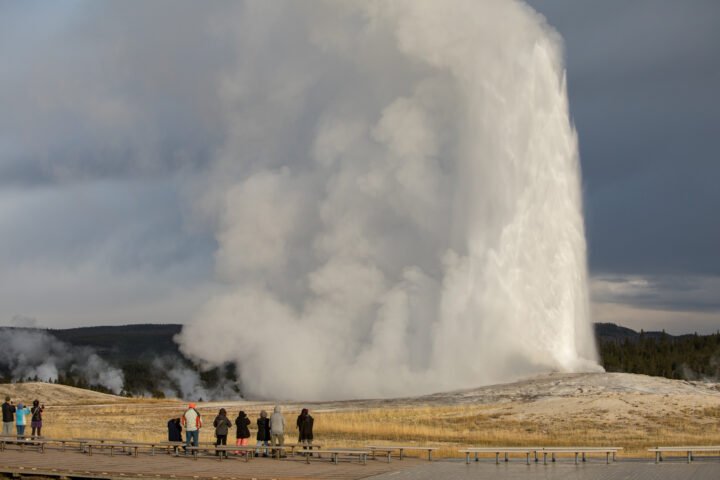
Arrive as early as possible. Check predicted Old Faithful eruption times at the visitor center when you arrive. Walk the Upper Geyser Basin boardwalk loop before crowds build. From there, Midway Geyser Basin is a short drive south.
Because road access and facility operating hours vary by season, check the National Park Service’s current operating dates before your visit to confirm what will be open on your specific travel date.
Yellowstone in 2 Days
Two days allows for more geographic coverage but still requires prioritization. A practical approach is to divide the park into its two main loops and spend a day on each.
Day 1 — Lower Loop (South): Focus on the geyser basins — Old Faithful, Upper Geyser Basin, Midway Geyser Basin — and then head east toward the Grand Canyon of the Yellowstone. Artist Point on the South Rim provides one of the park’s most dramatic viewpoints.
Day 2 — Upper Loop (North): Start early for Hayden Valley or, if you drive northeast, Lamar Valley for wildlife watching. Continue to Mammoth Hot Springs in the late morning or afternoon.
Two days is workable, but driving times between major stops add up quickly. A realistic approach means accepting that you will not reach every area of the park and planning your route accordingly. The NPS Directions & Transportation page provides useful information about distances and entrance points.
Yellowstone in 3 Days
Three days gives first-time visitors a meaningful experience without feeling entirely rushed. A general structure that works for many travelers:
Day 1 — Geyser Basins & Midway: Arrive early and head directly to the Upper Geyser Basin. Watch an Old Faithful eruption, walk the boardwalk loop, and then continue to Midway Geyser Basin for Grand Prismatic Spring. The Fairy Falls Trail, which includes a viewpoint above Grand Prismatic, is manageable on this day if you have the energy.
Day 2 — Grand Canyon of the Yellowstone & Hayden Valley: Drive to the Grand Canyon of the Yellowstone and walk the South Rim to Artist Point. Spend part of the afternoon in Hayden Valley, where bison herds and occasional bear sightings are common. The Mud Volcano area is a short detour on the way.
Day 3 — Mammoth Hot Springs & Northern Range: Drive the northern loop. Mammoth Hot Springs has its own distinct geology — travertine terraces that contrast sharply with the geysers further south. If time allows, drive toward Lamar Valley for a wildlife stop, though a dedicated early-morning Lamar visit works better with four days or more.
Exact routing should reflect your entrance point and accommodation location, as well as current road and trail conditions. The NPS Seasons page outlines what is typically accessible during different times of year.
Yellowstone in 4 Days
A fourth day meaningfully reduces the sense of rushing. It gives you room to:
- Spend a proper early morning in Lamar Valley for wildlife watching, which works best when you are not also trying to cover a major other section the same day
- Add a longer day hike — Mount Washburn (when conditions allow) or Fairy Falls — without sacrificing other stops
- Revisit a spot that was busy or weather-affected on a previous day
- Build in flexibility for an afternoon thunderstorm or an unexpected wildlife sighting that slows your drive
For travelers who want to see both Lamar Valley and the geyser basins thoroughly, four days is a more comfortable minimum than three.
Yellowstone in 5 Days
Five days suits travelers who want to genuinely slow down, hike more, or spend real time watching wildlife rather than checking attractions off a list.
With five days, you can:
- Spend dedicated mornings in Lamar Valley, where dawn light and early-rising wildlife make for the most productive viewing windows
- Complete multiple day hikes across different regions of the park
- Revisit favorite spots at different times of day
- Account for weather delays without losing significant planned time
- Explore quieter corners of the park that a three-day visit rarely reaches
Photographers and serious wildlife watchers often find five days to be a reasonable minimum for the kind of patience and positioning their interests require.
Is 7 Days Too Long for Yellowstone?
For travelers who prefer slow travel, a week is not excessive — it is genuinely useful. Yellowstone’s size means that even regular visitors discover areas they have not fully explored.
A seven-day visit allows for:
- Multiple hikes at different difficulty levels
- Extended time in Lamar Valley across several mornings
- Day trips to nearby areas, including Grand Teton National Park to the south
- Backcountry exploration for those with appropriate experience and permits
- Greater flexibility around weather, road conditions, or seasonal events like elk rut in September
Seven days is not the “best” choice for every traveler — for those on a tighter schedule or visiting Yellowstone as one stop among several, shorter trips are entirely reasonable. But for those who want the most comprehensive experience, a week provides room to genuinely settle into the park.
How Yellowstone’s Size Affects Your Itinerary
The park’s scale is the single most important practical factor in planning your trip length.
A few things that affect travel time and planning:
- Distances between regions are significant. The drive from Old Faithful to Lamar Valley takes approximately two hours each way under normal conditions.
- Speed limits inside the park are low. The standard limit is 45 mph, with lower limits in developed areas.
- Wildlife jams are common. Bison, bears, or wolves near the road can stop traffic for extended periods, particularly in Lamar Valley.
- Seasonal road closures change access. Not all roads are open at all times of year. The NPS road conditions and operating dates are the authoritative source for current access information.
- Your accommodation location matters. Staying inside the park reduces daily drive times significantly compared to commuting from a gateway town.
Plan each day around a geographic area, not a list of scattered stops. Driving across the full loop in a single day is possible but leaves little time for anything beyond the windshield.
Does the Season Change How Many Days You Need?
Yes — and in meaningful ways.
Summer (July–August): All major roads and facilities are typically open, but crowds are at their peak. Popular areas become congested during midday hours. Starting early each day helps, but summer visitors may find they need an extra day simply to navigate the busiest spots at a reasonable pace.
Late Spring (May–June): Some roads and facilities are still opening. Higher-elevation roads may be closed into May or early June. The NPS Seasons page provides general seasonal information, but current-year operating dates should always be verified. Fewer crowds make late spring appealing, though itineraries need to account for what is actually accessible.
Fall (September–October): Roads and facilities begin closing for the season as October progresses. Wildlife activity is strong in September during elk rut. A fall visit may require adjusting plans around service closures, but the reduced crowds and wildlife activity make the trade-off worthwhile for many travelers.
Winter (November–April): Most interior park roads are closed to private wheeled vehicles. Travel inside the park during winter requires guided snowcoach or snowmobile access. Winter visits are a distinct experience and require more advance planning. The NPS Plan Your Visit page is the best starting point for understanding winter access.
Regardless of season, do not rely on previous years’ opening or closing dates. Conditions vary year to year, and official NPS sources are the only reliable current reference.
How Many Days Do You Need for Hiking?
Hiking significantly changes the equation.
- Short walks and boardwalks: These fit easily into any trip length. The Upper Geyser Basin loop, Mud Volcano trail, and Mammoth Hot Springs terraces are all accessible without dedicated hiking days.
- Half-day hikes: Fairy Falls with the Grand Prismatic overlook and similar trails require a few hours but can usually be incorporated into a broader day’s itinerary with good planning.
- Full-day hikes: Trails like Mount Washburn (when conditions and access allow) take most of the day. Adding one or two hikes like this works better with four or five days than with three.
- Multiple hikes: If hiking is a primary goal rather than a supplement, five days or more gives you the flexibility to pursue trails properly without sacrificing the park’s other major features.
Always check current trail conditions and seasonal access before planning specific hikes. Trail availability changes with snowpack, weather, and bear management closures.
How Many Days Do You Need for Wildlife Viewing?
Wildlife viewing in Yellowstone is exceptional, but sightings are not guaranteed — and patience makes a significant difference.
Lamar Valley is the most reliable area for seeing wolves, grizzly bears, and large bison herds, particularly in early morning and late evening. A single early-morning drive through Lamar is possible on a three-day trip, but dedicated wildlife watchers typically benefit from multiple mornings in the area.
Factors that support better wildlife viewing:
- Early starts (dawn through mid-morning)
- Late afternoon and evening visits
- Patience and willingness to wait
- Binoculars or a spotting scope
- Visiting outside peak summer crowds, when animals are less disturbed
If wildlife viewing is your primary reason for visiting, build at least four to five days into your trip to allow for variability in sightings, weather, and road access conditions.
The NPS provides current wildlife information and safety guidelines on the Yellowstone wildlife pages.
How Many Days Do You Need If You’re Camping?
Camping inside the park adds planning considerations that affect your timeline.
Yellowstone has 12 campgrounds. Some accept advance reservations through Recreation.gov; others operate on a first-come, first-served basis. Reservation-based campgrounds in popular areas often fill well in advance during summer months, so planning your camping dates early is essential.
The logistics of setting up and breaking down camp each day, along with food storage requirements in bear country, add time that purely hotel-based visitors do not have to account for. Campers who move between campgrounds on different nights should build extra buffer time into their daily plans.
The NPS Camping page provides current campground information, reservation details, and rules.
Sample Yellowstone Trip Lengths at a Glance
| Trip Length | Recommended For |
|---|---|
| 1 Day | Tight schedule; one section only; very focused |
| 2 Days | Road trip stopover; major highlights across two loops |
| 3 Days | First-time visitors seeking a balanced highlights trip |
| 4 Days | Relaxed first visit; adds hiking and wildlife time |
| 5 Days | Hikers, wildlife watchers, photographers, flexible travelers |
| 7 Days | Slow travel; near-complete coverage; backcountry; nearby parks |
How to Choose the Right Number of Days
Choose 1–2 days if:
- Yellowstone is one stop on a larger road trip
- Your schedule is genuinely limited
- You are comfortable with a fast-paced, highlights-only visit
Choose 3 days if:
- This is your first visit and you want a balanced introduction to the park
- You want to see the major thermal features, the canyon, and at least one wildlife area
- You prefer a moderate pace without too much rushing
Choose 4–5 days if:
- You want meaningful hiking opportunities alongside the main attractions
- Wildlife viewing is a significant part of your plan
- You prefer flexibility for weather or road-related changes
- You want to explore the northeastern section of the park properly
Choose 7 days if:
- You are a slow traveler who prefers to spend extended time in one place
- You want to hike multiple longer trails
- You plan to combine Yellowstone with Grand Teton National Park
- You want to pursue photography or wildlife watching seriously
No single trip length is objectively correct. The right answer is the one that fits your travel style, available time, and what you want to experience.
Tips for Making the Most of Your Yellowstone Visit
- Plan by geographic area, not by attraction list. Group stops that are near each other rather than crisscrossing the park daily.
- Check current road conditions and operating dates before you go. The NPS operating dates page reflects current-year access information.
- Start early. The most popular areas are significantly less crowded before 9 a.m. Wildlife is most active at dawn.
- Allow extra driving time. Wildlife jams, slow zones, and road work delays are common. Build buffer into your daily schedule.
- Keep weather flexibility. Afternoon thunderstorms are frequent in summer. Snow can occur in any month at higher elevations. A flexible itinerary adapts to this.
- Book accommodation and campsites well in advance. Summer availability inside the park goes quickly. Check the NPS camping page for current availability.
- Follow wildlife safety rules. Stay at least 100 yards from bears and wolves, and at least 25 yards from all other wildlife.
- Carry food, water, and seasonal gear. Dining options inside the park are limited. Cell service is unreliable across much of the park.
- Check the Fees & Passes page for current entrance fees and pass options before arrival.
Frequently Asked Questions
Can you see Yellowstone in one day?
You can see a portion of the park in one day — specifically one geographic region, such as the geyser basins near Old Faithful. However, you cannot realistically cover the full park in a single day given its size and driving distances.
Is 2 days enough for Yellowstone?
Two days is enough for a highlights trip covering the main loops, but it requires a fast pace and careful prioritization. Travelers who want to hike, spend time in Lamar Valley, or explore at a relaxed tempo will find two days limiting.
Is 3 days enough for Yellowstone?
For most first-time visitors, three days provides a meaningful introduction to the park’s major features. It is not enough for a slow or comprehensive visit, but it is a practical minimum for seeing the thermal areas, the Grand Canyon of the Yellowstone, and at least one wildlife-watching area.
Is 4 days enough for Yellowstone?
Four days is a comfortable length for a first visit. It allows for more hiking, a dedicated wildlife morning in Lamar Valley, and greater flexibility if weather or road conditions affect part of your plan.
Is 5 days too long for Yellowstone?
Not for the right traveler. Five days suits hikers, wildlife enthusiasts, and photographers who want to explore more thoroughly and at a slower pace. For travelers who prefer a quick trip, five days may feel longer than needed.
How many days should first-time visitors spend in Yellowstone?
Three to four days is a practical range for most first-time visitors. Three days covers the highlights at a moderate pace; four days adds breathing room and additional activities.
Does the season affect how many days you need?
Yes. Seasonal road closures, facility operating dates, and crowd levels all affect what you can accomplish in a given number of days. Summer is the most accessible season but also the most crowded. The NPS Seasons page explains what is typically available across the year.
Does Yellowstone require a full week?
Not for most visitors. A week works well for slow travelers, serious hikers, wildlife watchers, or those combining Yellowstone with nearby parks like Grand Teton. For a highlights-focused first trip, three to five days is typically sufficient.
Travel information can change. Park rules, road conditions, operating dates, weather, entrance fees, permits, and availability may change over time. Always verify important details with the relevant official source before traveling.