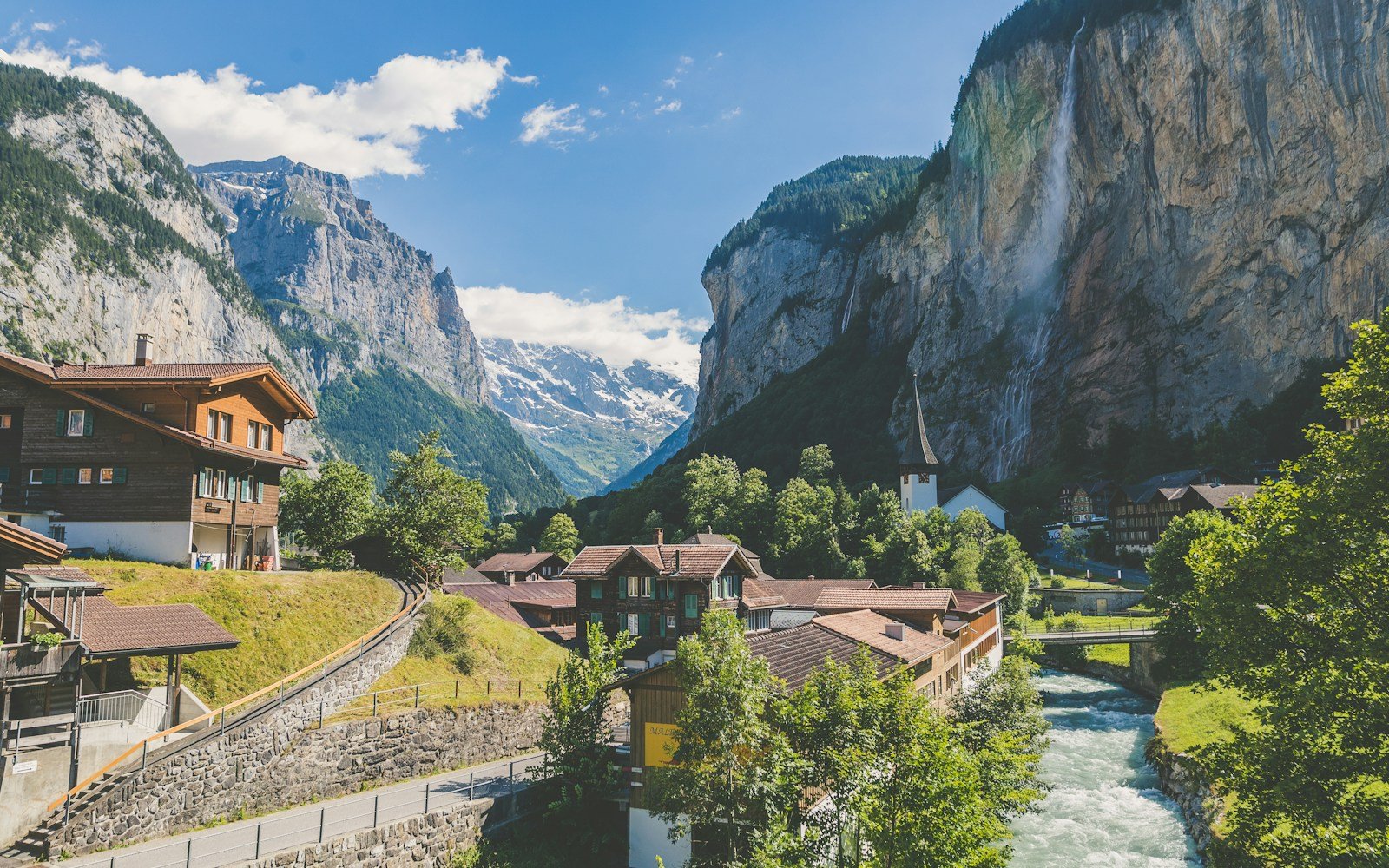
The Swiss Alps Grand Tour connects the most celebrated alpine passes in central Europe, including the Furka Pass (2,429 m), Grimsel Pass (2,164 m), and Gotthard Pass (2,106 m). Seamlessly linking high-altitude asphalt hairpins with historic cogwheel mountain railways and car-free glacier villages like Zermatt and Wengen, this 8 to 10 day circuit represents the pinnacle of engineered alpine touring.
Trip Briefing & Field Notes
Route 19, Route 6, Route 2 (Central Alpine Loop)
3 to 5 Days
June to October (Pass Open Window)
Wilderness Stargazer Geodesic Suite
There is no landscape on Earth where human engineering and colossal geological grandeur exist in more harmonious equilibrium than in the Swiss Alps. Roads do not battle the granite; they ascend with mathematical elegance across sheer cliffs, entering spiraling stone tunnels, bridging glacial gorges on slender arches, and summiting high cols where meltwater lakes mirror towering 4,000-meter peaks.
The Swiss Alps Grand Tour represents the golden standard for mountain road trips. Conceived to celebrate the historic coaching routes that carried European writers, poets, and mountaineers across the Alps in the nineteenth century, the modern circuit combines smooth tarmac with world-class transit integration. For official itineraries, electric vehicle charging maps, and pass status advisories, consult the resources of Switzerland Tourism Official National Authority.
The Central Alpine Pass Trifecta: Furka, Grimsel & Susten
The geographic epicenter of Swiss alpine motoring lies in the Uri and Valais Alps, where three legendary mountain passes form an interconnected loop:
- Furka Pass (2,429 meters): Immortalized in the 1964 James Bond film Goldfinger, the Furka climbs out of Andermatt toward the historic Hotel Belvedere, perched directly alongside the Rhone Glacier. Visitors can walk inside a 100-meter-long ice tunnel carved fresh each spring into the blue heart of the glacier.
- Grimsel Pass (2,164 meters): Characterized by smooth, granite domes scoured pale by prehistoric glaciation, hydro-electric reservoir lakes, and winding switchbacks through granite tunnels.
- Susten Pass (2,224 meters): The most modern pass road in the Alps, opened in 1945 specifically for scenic touring, featuring sweeping curves, graceful stone viaducts, and dramatic views of the Steingletscher glacier.

Seasonal Pass Status & Real-Time Mountain Monitoring
High Swiss alpine passes are generally open only from early June to late October. Heavy late-spring snowpacks or sudden autumn blizzards frequently prompt temporary closures. Motorists must always verify the operational status of every pass before setting off in the morning by consulting the authoritative updates at Swiss Alpine Passes Operational Status Network.
Field Advisory
PostBus Postal Horn Right-of-Way
Grand Tour Waypoint & Alpine Pass Table
The following logistical overview covers key mountain cols, elevations, and railway connections along the primary central circuit:
| Pass / Alpine Waypoint | Elevation | Connecting Valleys | Key Highlight & Transit Feature |
|---|---|---|---|
| Furka Pass | 2,429 m / 7,969 ft | Urseren (Uri) to Rhone (Valais) | Rhone Glacier ice grotto, Hotel Belvedere |
| Grimsel Pass | 2,164 m / 7,100 ft | Haslital (Bern) to Goms (Valais) | Totensee lake, granite glacier-scoured slabs |
| Susten Pass | 2,224 m / 7,297 ft | Innertkirchen (Bern) to Wassen (Uri) | Steingletscher view, engineered stone arches |
| Gotthard Pass (Tremola) | 2,106 m / 6,909 ft | Andermatt (Uri) to Airolo (Ticino) | Historic cobblestone Tremola switchbacks |
| Klausen Pass | 1,948 m / 6,391 ft | Altdorf (Uri) to Linthal (Glarus) | Urnerboden plateau, historic Klausenrennen race |
| Oberalp Pass | 2,044 m / 6,706 ft | Andermatt (Uri) to Sedrun (Graubunden) | Rhine source at Lake Toma, red lighthouse |
Seamless Integration with Mountain Cogwheel Railways
One of the greatest pleasures of Swiss touring is leaving the vehicle at valley terminals to ascend car-free villages via century-old cogwheel railways. At Lauterbrunnen, park your vehicle to take the mountain train up to Wengen and the Jungfraujoch, the highest railway station in Europe at 3,454 meters.
Similarly, visiting the iconic pyramid of the Matterhorn requires parking at Tasch and riding the shuttle railway into the car-free village of Zermatt. For timetable synchronization, regional rail passes, and combined motor-rail itineraries, explore the official portals of Swiss Federal Railways (SBB CFF FFS).
Whitepod Eco-Luxury Alpine Suites
CHF 460 / night
Driving Etiquette & Technical Preparation
To master Swiss mountain driving:
- Swiss Motorway Vignette: Driving on Swiss national expressways (Autobahn) requires an annual motorway vignette sticker (or e-vignette) costing CHF 40. While scenic passes do not require the vignette, accessing them via feeder motorways does.
- Engine Braking on Descents: Never descend high passes with continuous foot braking; this overheats brake pads and boils hydraulic fluid, leading to catastrophic brake fade. Shift your transmission into second or third gear to utilize engine compression.
- Speed Limits & Speed Cameras: Switzerland enforces strict speed limits: 80 km/h on rural roads and 50 km/h in villages. Speed camera enforcement is highly automated with substantial fines.
The Swiss Alps Grand Tour is more than an itinerary; it is an enduring masterclass in scenic travel that rewards drivers with unparalleled perspectives on mountain geography and cultural heritage.
Continue planning your journey with our companion mountain pass dossiers, geodesic lodging inspections, and packing blueprints:
-
Dolomites Great Alpine Road →
Classic limestone cols and hairpin switchbacks across northern Italy. -
Swiss Alpine Stargazer Pods →
High-elevation timber pods and glacier saunas in the Swiss Alps. -
Trans-Pyrenees Mountain Traverse →
Historic cols and wild mountain landscapes along the French-Spanish border.